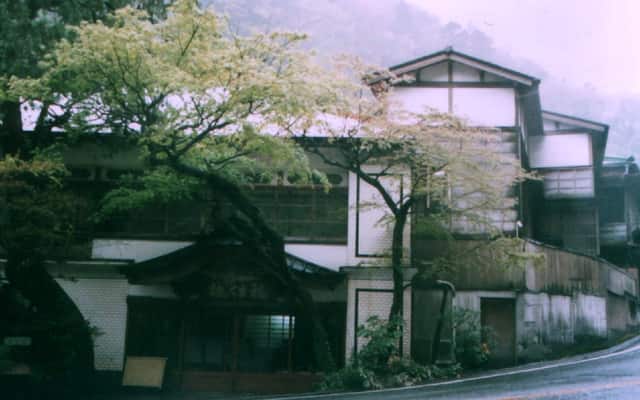
A ryokan is a traditional Japanese inn. You sleep in a room with tatami mats, have dinner and breakfast at the inn and often bathe in an onsen, a bath fed by a hot spring. According to the Japan National Tourism Organization (JNTO), the word means “travel house”, and the tradition goes back to the 10th century, when pilgrims and merchants needed somewhere to stay on the road.
Ryokan, hotel or minshuku
A hotel sells you a bed; a ryokan sells you an evening. You arrive in the afternoon, bathe, eat a multi-course dinner and sleep on a futon that staff laid out while you were at dinner. A minshuku is the simpler, family-run version, often with shared baths and plainer food.
In between are places that call themselves hotels but work like a ryokan: tatami, kaiseki (a seasonal multi-course Japanese dinner) and an onsen. On japanstays they carry the label “hotel in ryokan style”, for example Hatsuhana in Hakone or Oike Hotel at Lake Kawaguchi.
What a night includes
- Tatami: you walk on the mats in socks only. Street shoes stay at the entrance, where slippers are provided. JNTO advises not to roll suitcases across tatami or wooden floors.
- Yukata: every guest gets a light cotton kimono to wear around the inn and at night. The left side goes over the right, for men and women alike.
- Dinner: usually around 6 or 7 pm, in your room or a private dining room, often as kaiseki in many small dishes. According to JNTO, once booked it cannot be cancelled.
- Futon: after dinner, the room becomes the bedroom.
- Breakfast: also at the inn, at Shuhokaku Kogetsu at Lake Kawaguchi for example as a buffet.
The bath: shared, private hire or in your room
Many ryokans have a large shared bath, separated for men and women. On top of that there are often private hire baths (kashikiri) that you use alone or with your companion for 40 to 60 minutes, and rooms with a bath of their own. Whether real spring water flows into the room bath is rarely shown on booking sites; on japanstays it is listed for every inn with a source. At Kozantei Ubuya at Lake Kawaguchi, for example, some rooms have an open-air bath, but according to the inn, onsen water only feeds the large baths.
What a night costs
JNTO gives a typical range of 8,000 to 20,000 yen per person per night, almost always quoted per person. Inns with a private bath in the room are often well above that. Small taxes are added on site: in Hakone you pay a bath tax of 150 yen per person per night, and children under age 12 are exempt. In Fujikawaguchiko the bath tax is 150 yen; from 1 April 2027 the town also plans an accommodation tax of 200 yen per person per night.
How to book it right
Watch three things when booking. First the rate: “half board” or “dinner and breakfast” is the classic ryokan stay. Second the room type: a private bath or a Fuji view often applies only to certain rooms. Third your arrival time: many inns only pick you up from the station at set times, and dinner does not wait.
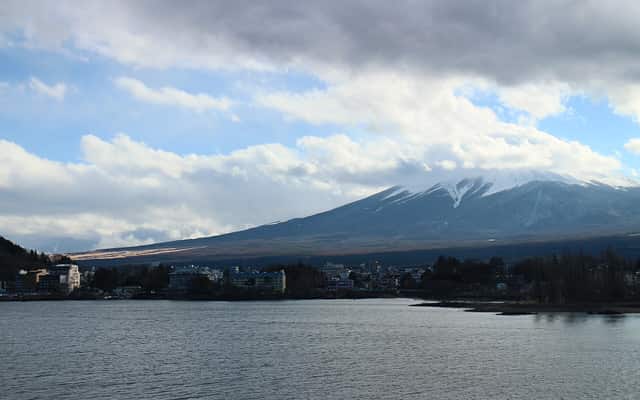
If you are not sure where to go: Hakone has a wide choice of inns with a bath in the room, and at the Fuji Five Lakes Mt Fuji stands right across the water.